

Pakistan’s Permanent Representative to the United Nations, Asim Iftikhar, briefed the UN Security Council on the Middle East and the Palestinian issue, stating that despite political progress, the situation in the occupied Palestinian territories remains extremely serious, with ongoing violations of the ceasefire.
He expressed gratitude to the UN Special Coordinator for the Middle East Peace Process, Ramiz Alakbarov, for his comprehensive briefing.
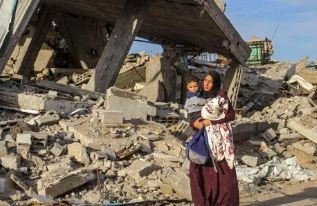
Over the past two years, Gaza has witnessed a devastating war that inflicted immeasurable suffering on besieged Palestinians, leaving over 70,000 people dead, most of them women and children. The social and economic infrastructure has been largely destroyed, ceasefire demands were repeatedly ignored, and calls for accountability went unanswered.
Despite this grim scenario, two important developments took place:
A high-level meeting was held in July to pursue a peaceful solution and the two-state solution, followed by the adoption of the New York Declaration on 12 September, committing to concrete, irreversible steps toward an independent Palestinian state.
The Sharm El-Sheikh Peace Summit brought regional and international partners together to maintain the ceasefire, address humanitarian devastation, and establish a credible political path for Palestinian self-determination and statehood.
This process paved the way for the UN Security Council Resolution 2803, and Pakistan welcomed President Trump’s personal efforts and initiatives aimed at ending the conflict, rebuilding Gaza, preventing displacement, promoting comprehensive peace, and halting West Bank annexation.
Asim Iftikhar highlighted that Israeli airstrikes continue to kill and injure civilians, including children, showing that the ceasefire has yet to provide full protection on the ground. The West Bank also faces increasing settler and military aggression, with entire villages displaced and communities living under constant fear.
He emphasized that for meaningful progress, full implementation of Resolution 2803 is essential, ensuring Palestinian-led governance, reconstruction, and institutional capacity, so that Palestinians can live without fear and return to normal life.

Comments are closed, but trackbacks and pingbacks are open.