

By: Sirajuddin
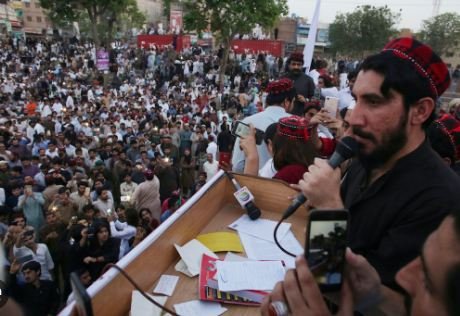
In October 2024, the banned Pashtun Tahafuz Movement (PTM) held a major jirga in Khyber District, announcing plans for future protests and public mobilization. However, since then, the organization has remained silent — its leaders have disappeared from the public eye, raising the question: Has PTM come to an end?
According to some analysts, that jirga turned out to be PTM’s “last gathering.” The movement, once launched in the name of Pashtun rights, now appears either dissolved or in its final phase.
Observers note that while supporters still exist, the movement no longer shows any visible organization, leadership, or coherent plan.
Peshawar-based journalist Anwar Zeb, who has covered several PTM rallies and jirgas, said the movement and its leader, Manzoor Pashteen, gained sudden nationwide recognition after the killing of Naqeebullah Mehsud.
Also Read: Lester B. Pearson Scholarship for Women 2026
“PTM initially presented itself as a non-political movement,” he said, “but in practice, it drew political figures around it. The movement raised its voice against injustice and oppression, but the October 2024 jirga proved to be a turning point. Since then, Manzoor Pashteen and his close aides have vanished from the scene.”
“Over a year has passed without any activity,” Anwar added. “Public engagement has completely broken down — a clear sign that any movement has reached its end.”
Another investigative journalist from Peshawar, Waseem Sajjad, believes that while the government crackdown silenced PTM, a revival cannot be ruled out.
“Following the Khyber jirga,” he explained, “the organization faced internal divisions, government action, and legal cases. After the ban and arrests, its leadership went underground. For now, the movement is inactive, but calling it completely over might be premature.”
Waseem added that PTM faced allegations of foreign funding and promoting an “anti-state narrative,” though debate continues over whether the group was inciting unrest or highlighting genuine grievances.
“Disagreements aside,” he said, “PTM succeeded in drawing the state’s attention to the long-neglected tribal areas.”
Some analysts interpret PTM’s sudden ban and disappearance as signs of its failure. However, insiders claim that senior members remain in contact and have temporarily gone silent to avoid government persecution.

Comments are closed, but trackbacks and pingbacks are open.